


A civic storytelling initiative confronting systemic failure in America — and building a path toward what actually works.
The Premise
Something fundamental is broken in the United States, and the way information now spreads is making it worse.
False narratives travel faster than lived reality.
Outrage spreads faster than context.
Incentives reward distortion.
Broken is built for the media environment we actually live in.
If attention is the battlefield, clarity cannot stay passive.

What this is
(and isn’t)
Broken is not punditry.
It is not satire.
It is not party messaging.
It is an intervention.
The goal is to identify what is failing, show how real people are affected, and elevate solutions that withstand scrutiny.
The tone is direct.
Uncomfortable when necessary.
Grounded in reality.
Empathy leads.
Evasion does not.

Where the
stories start
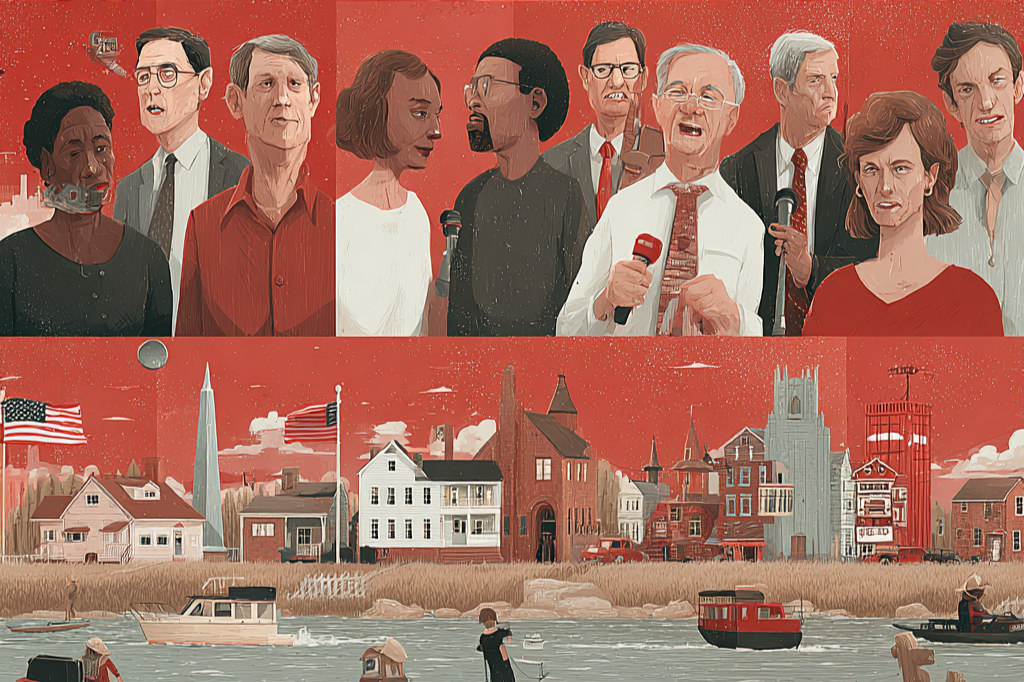
The project begins with everyday Americans living inside broken systems:
The rising cost of living
An economy stacked against working people and small businesses
Inaccessible healthcare
Immigration strain
Failing schools
These issues are often debated in abstract terms.
But lived experience is not abstract.
A family balancing grocery bills.
A worker navigating job uncertainty.
A parent struggling to access care.
A small business owner absorbing rising insurance costs.
Personal stories cut through ideology because they center on dignity, stability, and security, values shared across political lines.
When people see their own pressures reflected in someone else’s story, especially someone from a different region or background, defensiveness lowers and recognition rises.
Shared pressure is harder to dismiss than shared ideology.
From that foundation, Broken brings in experts, practitioners, and leaders across the political spectrum who are willing to engage seriously with the problem and the tradeoffs required to fix it.
why local
subject driven
storytelling
Broken is intentionally subject-driven. There is no central host or singular point of view.
Local voices speak to local problems. Those same problems echo across regions.
Patterns emerge organically. What bridges the divide is recognition.
Why This Matters
for 2026-2028?
Broken is a social-first civic storytelling initiative designed to operate inside the current media ecosystem and shape narrative terrain in competitive regions before electoral identities harden.
It addresses three strategic realities:
Voters form impressions early
Algorithms reward emotional framing over nuance
Economic pressure is the dominant cross-partisan concern
This is narrative infrastructure designed to expand shared economic understanding across competitive regions.
STRATEGIC BENEFITS
Expands Reach Beyond Traditional Campaign Tone
Subject-driven storytelling lowers partisan defenses and engages independents and infrequent voters.
Reinforces Affordability and Stability Narratives
Centers cost of living, healthcare access, job security, and economic transition without scripted framing.
Operates Continuously, Not Seasonally
Builds pressure and pattern recognition over time rather than spiking during election windows.
Creates Durable Content Assets
Short-form, mid-length, and feature synthesis provide reusable media across cycles.
Strengthens Competitive-State Presence
Focus on states with overlapping House, Senate, and Electoral College significance.
WHAT PARTNERSHIP
ENABLES
Institutional alignment allows Broken to:
Scale distribution in competitive regions
Access policy experts and credible validators
Integrate with organizing infrastructure where appropriate
Accelerate earned media visibility
Editorial independence with outcome-based accountability and fact-check protocol.
With the right backing, Broken becomes a connective layer between lived economic pressure and functional governance.
The opportunity is to build narrative momentum early, not react late.
IMPACT METRICS
Geographic engagement density by competitive district
Short-to-long form retention conversion
Share velocity in target regions
Earned media pickup
Audience growth in battleground states

THE MEDIA REALITY
WE’RE OPERATING IN
The current media environment rewards:
Outrage over accuracy
Speed over understanding
Tribal validation over shared reality
Broken does not pretend people are scrolling in good faith. It is built for the reality we are living in, not the one we wish we had.

HOW WE EARN ATTENTION
Short-form, platform-native content appears daily on TikTok and YouTube Shorts.
It is designed to hijack the same attention mechanics driving outrage and misinformation, then deliberately redirect them toward clarity, context, and real solutions.
Conflict earns attention. Truth holds it. Short-form is the entry point, not the destination.
Execution:
A Rolling Regional Project
Broken operates as a rolling, regional deployment model.
A new region every 4-6 weeks
A lean core team travels region to region
Local hires are brought in as needed
This allows Broken to:
Stay current
Respond to real-time relevance
Learn from audience response
Adjust focus without losing momentum
DIFFERENT PLACES.
SIMILAR PRESSURES.
Regional deployments allow multiple communities to be documented within a single visit.
Urban centers
Suburban corridors
Rural communities
DELIVERABLES
Each regional deployment produces a structured set of documentary and social content designed to circulate within today’s digital media environment while also contributing to the larger documentary project.
Character Stories
Each deployment follows 3–4 individuals whose lived experiences reflect broader economic pressures.
Examples may include:
• a teacher in an underserved community
• a family navigating medical debt
• a young person struggling to find stable work
• a nurse working in an understaffed hospital
Deliverables per person
1 Mini Documentary
3–5 minute story-driven short film
Short-Form Social Content
3–5 vertical videos per character
30–90 seconds each
Designed for TikTok, Instagram, YouTube Shorts
Total per deployment (characters)
3–4 mini docs
12–20 social videos
Community Town Hall
Each deployment concludes with a town hall-style gathering where the featured individuals and members of their community come together to discuss the issues they’re facing.
The conversation focuses on 3–5 core topics relevant to the region.
Examples:
cost of living
healthcare access
education
workforce opportunities
housing
Town Hall Deliverables
Full Discussion
45–60 minute edited town hall
Topic Chapters
3–5 individual topic segments
5–10 minutes each
Short-Form Social Content
5–10 vertical videos per topic
30–90 seconds each
THE LONG ARC:
Feature Documentary
Over three years, Broken builds a national archive of lived economic pressure across competitive regions.
By 2028, that archive becomes strategic leverage.
The feature documentary is not a standalone creative product. It is a synthesis of documented patterns across states central to federal outcomes.
THE FILM CONSOLIDATES
Affordability strain
Workforce disruption
Healthcare access
Housing instability
Institutional fatigue
INTO ONE COHESIVE
EVIDENCE-BACKED NARRATIVE.
The release window ahead of the 2028 general election ensures:
Pattern recognition is established before peak campaign messaging
Economic framing is grounded in real people, not abstract talking points
Narrative cohesion exists across battleground regions
The goal of the film is to reinforce outcome-based governance and economic stability.
By fall 2028, the public conversation will already be formed. This ensures it is formed around lived reality rather than distortion.

WHY THIS
IS PHASED
The political calendar matters.
The 2026 midterms and the 2028 general election are different moments and require different work.
Phase 1 Meets the country before the midterms.
Phase 2 Intensifies before 2028.
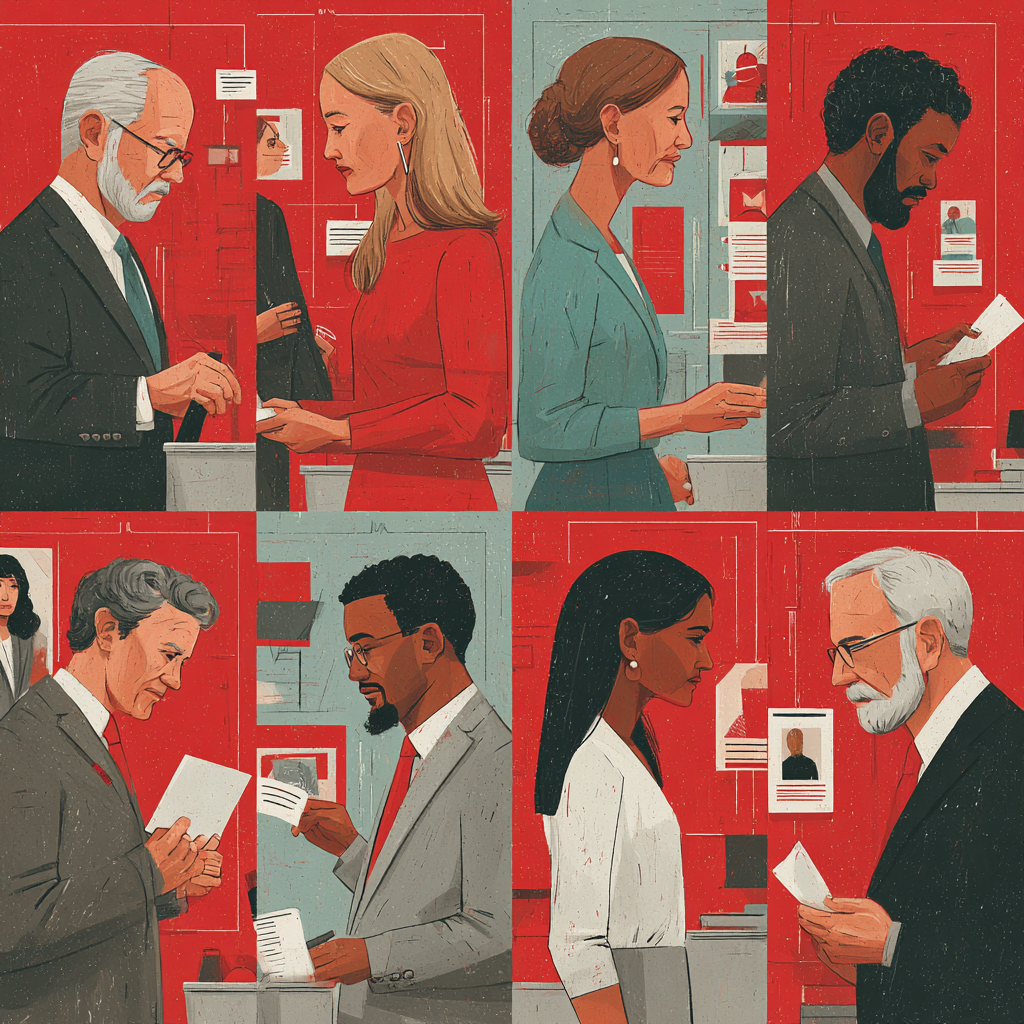
TIMING IS THE STRATEGY
Phase 1 (2026)
Shared Reality
Objective: Restore clarity.
Focus areas:
Cost of living and wage stagnation
Housing affordability and stability
Healthcare access and medical debt
Immigration and labor markets
Education and opportunity gaps
The goal is shared reality.

PHASE 1 LOCATIONS
Phase 1 combines a high-visibility national narrative deployment with a set of core battleground states that are likely to influence control of Congress.
The strategy begins in Texas, where a competitive Senate race and national attention create an opportunity to introduce Broken to a large audience. From there, the project moves into battleground states where small shifts in voter sentiment could shape the balance of power in Washington.
Texas (National Narrative Deployment)
Rapid population growth, housing affordability pressures, healthcare access gaps, and immigration policy tensions make Texas a powerful lens through which to explore the economic realities facing working Americans. A competitive Senate race will also bring national attention to the state.
Michigan
Manufacturing transition, wage pressure, and the future of union labor remain central to the economic identity of the Midwest and continue to influence federal election outcomes.
Pennsylvania
Energy transition, cost of living, and the divide between urban and rural economies make Pennsylvania one of the most important bellwether states in the country.
North Carolina
Rapid population growth, housing costs, and shifting suburban demographics are reshaping the political landscape in one of the most competitive states in the Southeast.
Arizona
Water scarcity, housing affordability, and workforce migration are driving economic and political change in one of the country’s fastest-growing battleground states.
Phase 2 (2026-2028)
CONCENTRATION
OF PRESSURE
Objective: Move from shared reality to lived consequences.
Phase 2 deepens the issues people feel every day:
Cost of living and wage stagnation
Housing affordability and stability
Healthcare access and medical debt
Immigration and labor markets
Education and opportunity gaps
And expands into emerging pressures that will define the next decade:
Political climate and violence
Mental health and loneliness
Institutional trust and civic fatigue
The rise of AI and workforce disruption
Job security and economic transition
Energy costs and local economies
Income inequality and mobility
Money in politics and accountability
Foreign policy decisions that impact domestic life
Phase 2 connects policy to paycheck, technology to job security, and governance to everyday dignity.
PHASE 2 LOCATIONS
The Battleground Spine
These states consistently sit at the center of close federal contests. They combine Electoral College significance, competitive House districts, and narrow statewide margins. Small shifts here often reverberate nationally.
Pennsylvania
A large, electorally pivotal state with multiple competitive House districts, where suburban turnout and working-class economic sentiment often shape national outcomes.
Shifts typically hinge on suburban margins, union household turnout, and perceptions of economic stability.
Michigan
A Midwest battleground where manufacturing transition, cost of living, and turnout patterns influence both congressional balance and presidential math.
Outcomes often depend on Detroit turnout, suburban margins, and economic confidence.
Wisconsin
A consistently close state where small swings in urban turnout and suburban voting behavior can tip statewide results.
Changes usually reflect turnout gaps and shifts among non-college and suburban voters.
Arizona
A fast-growing Sun Belt state where migration, housing affordability, and water stress intersect with competitive federal races.
Results often track suburban realignment, Latino turnout, and independent voter movement.
Georgia
A high-growth state with changing suburbs, where demographic shifts continue to reshape federal competitiveness.
Statewide outcomes often hinge on metro Atlanta turnout and suburban vote margins.
North Carolina
A large and diversifying state where suburban expansion and economic mobility pressures drive close statewide results.
Margins frequently reflect turnout differences in urban centers versus rural counties.
Special Consideration
These states may not always anchor the Electoral College map, but they carry structural, demographic, or symbolic weight that can influence congressional balance or national narrative.
Nevada
A tightly contested state anchored by a service economy, where turnout fluctuations can have outsized impact.
Margins tend to depend on Clark County turnout and economic sentiment in tourism sectors.
Ohio
A Midwest state reflecting broader realignment trends, where economic narratives often influence federal results.
Shifts typically correlate with working-class voter movement and suburban competitiveness.
Texas
A populous state with many congressional districts and rapidly growing suburban corridors.
Statewide competitiveness would depend on sustained suburban shifts and turnout growth in major metro areas.
Florida
A large Electoral College state with diverse regional economies and turnout variability.
Results often reflect turnout margins in South Florida, the I-4 corridor, and senior voter behavior.
Iowa
A smaller but symbolically influential state where rural economic sentiment often mirrors national trends.
Changes tend to track agricultural economics and rural turnout patterns.
Virginia
A state blending federal workforce stability with suburban cost pressures, frequently featuring competitive congressional districts.
Statewide margins often hinge on Northern Virginia turnout and suburban alignment.
FROM PRESSURE
TO DIRECTION
As 2028 approaches, Broken elevates:
Policies that demonstrate results
Leadership grounded in outcomes
Ideas that withstand scrutiny
The goal is functional governance.
WHY THIS MATTERS NOW
Beliefs are already forming.
Algorithms are already shaping outcomes.
Broken exists to raise the quality of the conversation before decisions harden.


National Timeline
JUNE 2026 -OCTOBER 2028
Phase 1: June – Nov 2026
Phase 2: Jan 2027 – Oct 2028
Continuous production. Continuous release.
PHASE 1 CALENDAR
June 2026 — Michigan
July 2026 — Pennsylvania
August 2026 — North Carolina
September 2026— Maine
October 2026— Arizona
Content begins releasing within 7–10 days of filming.
PHASE 2 DEPLOYMENT
Average cadence:
One regional deployment every 4–6 weeks
5–7 days on the ground per region
3–4 weeks of rolling release per deployment
The 2028
Convergence
2026 establishes shared economic clarity in competitive regions.
2027 builds cross-state pattern recognition.
2028 consolidates that recognition into national alignment.
This is not episodic storytelling.
It is cumulative narrative conditioning.
Three years of documented lived experience converge into a disciplined national synthesis.
Feature documentary moves into final consolidation
Cross-region comparison accelerates
Economic through-lines become explicit
Pattern recognition solidifies
Audiences have already encountered the stories.
Now we reframe them as a cohesive national arc.
Conclusion:
Blurring Party Lines
Through Shared Experience
Broken is built on a simple premise:
Economic pressure does not check party registration.
A parent worried about rent.
A worker navigating automation.
A family facing medical debt.
A small business absorbing rising insurance costs.
These pressures are lived across red, blue, and battleground states alike.
By grounding the narrative in lived experience rather than partisan framing, Broken reduces ideological reflex and elevates shared stakes.
When voters see their own struggles reflected in someone from a different region or political background, recognition replaces defensiveness.
Recognition creates common ground.
Common ground makes policy tradeoffs possible.
The objective is not to erase political differences.
It is to re-center the conversation on outcomes:
Stability
Dignity
Opportunity
Functional governance
Shared pressure becomes shared direction.
In that environment, party identity matters less than performance and results.